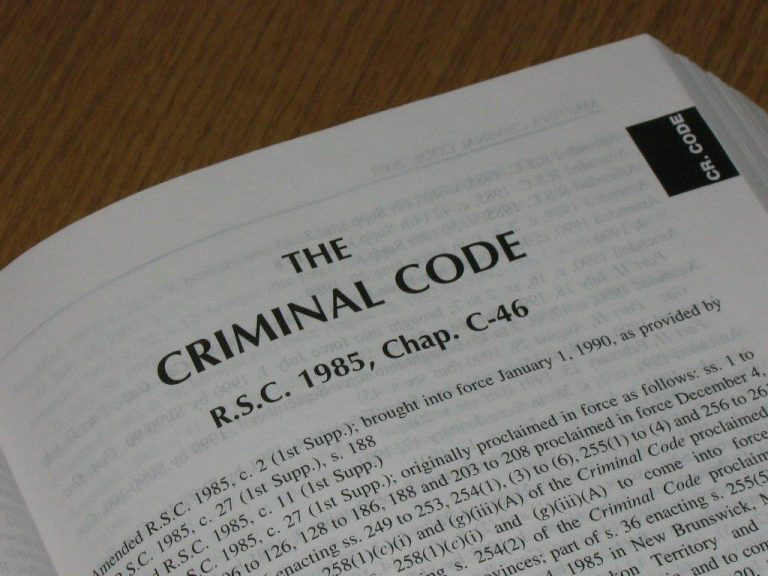
Evidence of sexual activity between a complainant and another person may be admitted if it is not tendered for a purpose prohibited by s.276(1) of the Criminal Code and it satisfies the admissibility test under s.276(2). The basic principles governing the application of s.276 were reviewed in Regina v. T.(M.), 2012 ONCA 511, per Watt J.A., on behalf of the court (at paras. 29-43):
The Governing Principles
Section 276 of the Criminal Codecreates a statutory rule of admissibility. Enacted in negative terms, the section, like other admissibility rules, is exclusionary; it precludes the admission of certain evidence. The exclusionary effect of the rule only becomes engaged when three requirements have been met. For
discussion purposes, these requirements, which are cumulative, may be characterized as:
i. offence charged;
ii. subject-matter; and
iii. purpose.
The exclusionary rule prohibits the person charged from introducing certain evidence (subject-matter) for a specific use (purpose) in proceedings for a listed crime (offence).
The “offence” requirement is satisfied where the proceedings in which evidence is tendered relate to a listed offence. Among the listed offences are the crimes charged here: sexual assault, sexual interference, and invitation to sexual touching.
The “subject-matter” requirement, which appears in both sections 276(1) and (2), is best expressed in the language of subsection (2):
Evidence … that the complainant has engaged in sexual activity other than the sexual activity that forms the subject-matter of the charge, whether with the accused or with any other person.
If the subject-matter of the proposed evidence falls outside the statutory language, the exclusionary terms of the provision do not apply. On the other hand, satisfaction of the subject-matter requirement, on its own, will not necessitate exclusion; the “purpose” requirement must also be satisfied.
The “purpose” requirement is crucial to the operation of this exclusionary rule, just as it is with the common law hearsay rule. To engage the exclusionary rule of s. 276, the proposed evidence must be offered to support either of two prohibited inferences grounded on the sexual nature of the activity:
i. that the complainant is more likely to have consented to the conduct charged; or
ii. that the complainant is less worthy of belief.
Where the purpose underlying the introduction of the evidence of extrinsic sexual activity is neither of those prohibited by s. 276(1), this exclusionary rule is not engaged.
Section 276(2) provides an exception to the exclusionary rule. To gain entry under this exception, evidence of the complainant’s extrinsic sexual activity must:
i. be of specific instances of sexual activity;
ii. be relevant to an issue at trial; and
iii. have significant probative value that is not substantially outweighed by the danger of prejudice to the proper administration of justice.
To determine whether the evidence should be admitted under this exception, the presiding judge must follow the procedure described in ss. 276.1 and 276.2 and consider the factors listed in s. 276(3).
The admissibility rules of s. 276 apply only where the evidence proposed for admission is of extrinsic sexual activity on the part of the complainant. A previous allegation of assault, without more, would fall outside the section: R. v. Gervais1990 CanLII 3701 (QC CA), (1990), 58 C.C.C. (3d) 141 (Que. C.A.), at p. 154. Questions that focus on the fact, rather than the details, of an allegation of sexual assault are not prohibited by the section: R. v. M. (A.G.)(1993), 26 C.R. (4th) 379 (Que. C.A.), at p. 393.
To be receivable in a criminal trial each piece of evidence must satisfy three requirements:
• relevance
• materiality
• admissibility.
These requirements are cumulative. Evidence that comes up short on any requirement is excluded from consideration by the trier of fact.
Thus, Section 276 of the Criminal Code permits cross-examination of sexual offence complainants on prior sexual activity only in certain circumstances. In ReginavR.V.,2018 ONCA 547 (CanLII),the Ontario Court of Appeal held that s.276 does not require that the defence particularize specific instances of alleged prior sexual activity. Rather the defence lawyer is only required to demonstrate that the prior sexual activity be “adequately identified”; and tied to a proper purpose. The court ordered a new trial for sexual assault where the defence was wrongly prevented from cross-examining the complainant on her prior sexual activity.
In that case, the Crown at trial had argued that the fifteen (15) year-old complainant’s pregnancy was consistent with her allegations. This implied that only the accused could be the father. The application judge dismissed the defence’s application under s.276 to cross-examine the complainant on whether this was true. The Court of Appeal held that “the Crown’s position amounted to this: we say you are the only one who could have impregnated the complainant but you are not allowed to question her about whether this is true” (at para. 27). This, the Court of Appeal found, was “patently unfair.”
The Ontario Court of Appeal held that although there was no “fixed rule” that required granting the s.276 application, the application judge erred by requiring the defence to articulate particularized “specific instances of sexual activity.” The sexual activity was adequately identified as any activity that could have caused the pregnancy. The court’s focus should be on the probative value of the line of questioning, not on the likelihood that the cross-examination will produce results. It was no substitute to permit the defence to simply ask the complainant whether she was telling the truth; the point of cross-examination is to challenge the witness’s answers.
The court also held the trial judge, who replaced the application judge before trial, erred by holding he lacked jurisdiction to revisit the application judge’s s.276 application. A trial judge always has jurisdiction to revisit prior rulings in the same trial, and this is also true where the trial judge has replaced another judge.
Being charged with a serious, violent crime like sexual assault, may call for the assistance of an Criminal Defence lawyer in Alberta or other provinces in Canada. A lawyer will review all the evidence about the alleged sexual assault; and advise his or her client on how best to fight any charges. If the accused was not taken into custody according to the letter of the law, a lawyer might be able to have the charges dropped. An accused client has the right to mount an aggressive defense with the knowledge that it is incumbent upon the Crown to prove guilt beyond a reasonable doubt.
If you have been charged with a sexual assault offence under the Criminal Code of Canada, contact Mr. J.S. Patel, Calgary Criminal Lawyer for an initial free consultation at 403-585-1960.