The Court of Appeal considered the entitlement to a preliminary hearing under Section 535 of the Criminal Code of Canada in Regina v. S.S., 2021 ONCA 479. The Court upheld the order of the review judge, who allowed an application for certiorari from the order of the application judge, who found that the accused was entitled to a preliminary inquiry pursuant to s.535 of the Criminal Code. The court agreed with the review judge that the accused was not entitled to a preliminary inquiry. The accused was charged with one count of sexual assault on a person under the age of 16 and one count of sexual interference. The indexed offences were alleged to have occurred between January 1, 2009 and December 31, 2010. At the time that the offences were alleged to have occurred, the maximum penalty for both offences was ten (10) years of jail. There was an increase to the maximum penalty for the offence of sexual assault on a person under the age of 16 was increased to 14 years, if the Crown proceeds by way of indictment, as it had in the instant case in 2005. The maximum penalty for the offence of sexual interference was also increased to 14 years. On September 19, 2019, s.535 was amended to restrict the right to a preliminary inquiry to persons charged with an indictable offence that is punishable by imprisonment for 14 years or more. In December 2020, the accused elected a trial in Superior Court by judge and jury. He requested a preliminary inquiry.
The court concluded that the accused was not facing a punishment of 14 years or more in this case. Therefore, he was not entitled to a preliminary inquiry pursuant to s.535. The court stated (at para. 16) that, in reaching this conclusion, it did not need to “decide whether an accused person can waive their rights under s. 11(i) of the Charter. Even if they can, s. 43(d) of the Interpretation Act would preclude a court from imposing a sentence of more than 10 years.” The court noted that its conclusion in this regard was also consistent with the conclusion reached in Tran v. Canada (Public Safety and Emergency Preparedness), [2017] 2 S.C.R. 289 where the Court averred:
17] My conclusion in this regard is also consistent with the conclusion reached in Tran v. Canada (Public Safety and Emergency Preparedness),2017 SCC 50, [2017] 2 S.C.R. 289. In that case, the issue was the immigration consequences of a person convicted of an offence where the maximum penalty was, at the time of the commission of the offence, seven years. However, before conviction, the penalty was raised to 14 years with the result that a conviction for the offence would fall within the definition of serious criminality for immigration purposes. The immigration authorities began proceedings to remove the accused from Canada on the basis that he had been convicted of an offence involving “serious criminality” within the meaning of s. 36(1)(a) of the Immigration and Refugee Protection Act, S.C. 2001, c. 27(“IRPA”). The accused sought judicial review of the decision to refer his case for an admissibility hearing under the IRPA. In the end result, the Supreme Court of Canada found that the immigration authorities could not rely on the serious criminality provision in part because the maximum sentence for the accused’s offence at the time he committed it was seven years. In reaching that conclusion, Côté J. said, at para. 35:
Turning to the interpretation of “punishable by a maximum term”, in my view, a contextual reading of s. 36(1)(a) [of the IRPA] supports only one conclusion: the phrase “punishable by a maximum term of imprisonment of at least 10 years” refers to the maximum sentence that the accused person could have received at the time of the commission of the offence. [Emphasis added].
[18] The appellant attempts to counter this interpretation by submitting that it looks at the circumstances of the offender rather than at the offence itself and thus offends the point made in Windebank, at para. 36: “In my view, the flaw, both in the respondent’s argument and in the decisions below, is that they confuse the seriousness of the offence with the seriousness of the offender, that is, their individual circumstances.”
[19] I do not agree. The situation here and the one in Windebank are not comparable. Here we are dealing with the maximum punishment that was stipulated for the offence at the time that the offence is said to have been committed. Thus, the issue in this case does not involve the personal characteristics of the appellant, in the sense that those personal characteristics might drive the appropriate sentence, such as the possible application of the dangerous offender provisions. Rather, it involves the penalty that can be imposed on the appellant, and anyone else in the same situation, arising from the timing of the offence, as the key for determining the seriousness of the offence for the purpose of s. 535. The personal characteristics of the appellant are not engaged in this analysis. The only connection to the appellant in his personal capacity is that it is the timing of his alleged actions leading to the offence that are of importance.
[20] Further on this point, in Tran, the court supported its conclusion that the timing of the offence determined the maximum sentence for the purpose of s. 36(1)(a) of the IRPA, in part, based on the presumption against retrospectivity, which applies independent of s. 11(i) of the Charter: at para43. In words that are apt to the situation here, Côté J. said, at para. 43: “The purpose of this presumption is to protect acquired rights and to prevent a change in the law from ‘look[ing] to the past and attach[ing] new prejudicial consequences to a completed transaction’ (Driedger (1983), at p. 186).”
If you have been charged with a sexual assault and seek to determine your procedural rights (i.e. preliminary hearing), contact Mr. J.S. Patel,Barrister at 403-585-1960 for a consultation.
The use of a driver’s statement in a jury trial for impaired driving charges.
The application of the rules regarding the assessment of an accused person’s statement as raised in R. v. W.(D.),1991 CanLII 93 (SCC)was considered in Regina v. Bacci, 2018 ONCA 928, where the Court of Appeal in Ontario quashed the accused’s conviction for impaired operation causing bodily harm, two counts of driving over 80 causing bodily harm contrary to s.255(2.1) of the Criminal Code, and two counts of dangerous driving causing bodily harm contrary to s.249(3) of the Criminal Code. This was due to an error errors in the trial judge’s W.(D.) instruction in his recharge to the jury.
The facts of the case were simply as follows. The accused and her four passengers were returning to the accused’s family cottage when their car flipped over after the accused failed to negotiate a curve. All four passengers testified at trial. The accused told the police “I don’t know what happened. The car just lost control.” The Crown expert witness admitted that there was a probability, albeit low, that the accident could have been caused by a mechanical failure.
Central to the success of the appeal hinged on the W.(D.) instruction relating to the accused’s statement. Again, the purpose of this instruction was famously described by the Supreme Court of Canada in the following clear terms:
First, if you believe the evidence of the accused, obviously you must acquit.
Second, if you do not believe the testimony of the accused but you are left in reasonable doubt by it, you must acquit.
Third, even if you are not left in doubt by the evidence of the accused, you must ask yourself whether, on the basis of the evidence which you do accept, you are convinced beyond a reasonable doubt by that evidence of the guilt of the accused.
The original charge to the jury was:
I want to mention one particular piece of evidence you heard because it is deserving of special treatment according to the law.
[1] You heard from Alexandra Jones that she heard Megan Bacci state at the accident scene, “I do not know what happened. My car just lost control.” If you believe that this what was reported by Alexandra Jones was in fact said by Megan Bacci and if you accept Megan Bacci’s explanation that her vehicle just lost control and you find this lose [sic] of control was caused entirely by mechanical failure, you must find Megan Bacci not guilty of impaired operation causing bodily harm, operation of a motor vehicle with a blood alcohol concentration of over 80 causing bodily harm and dangerous driving causing bodily harm. You might still find her guilty of the lesser included offences in counts 1 through 4. Even if you do not accept that Megan Bacci said what was reported by Alexandra Jones or accept Megan Bacci’s explanation for what happened or accept the lose [sic] of control was caused entirely by mechanical failure, if it leaves you with a reasonable doubt about whether Megan Bacci caused the accident and the accompanying bodily harm, you must find her not guilty of those offences because the Crown would have failed to prove an essential element, that is causation of those offences beyond a reasonable doubt. You may still, however, find her guilty of the lesser and included offences in counts 1 through 4.
[2] Even if the evidence does not 1eave you with a reasonable doubt about whether Megan Bacci caused the accident, you may convict Megan Bacci only if the rest of the evidence that you do accept proves her guilt on that essential element of causation beyond a reasonable doubt.
The recharge to the jury was:
The one last area I want to mention the one particular piece of evidence you heard because it deserves special treatment and that’s what Megan Bacci said that what Alexandra Jones stated that she heard that is, “I do not know what happened, my car just lost control.”
I want to repeat this to you. If you believe that what was reported by Alexandra Jones was in fact said by Megan Bacci, and if you accept Megan Bacci’s explanation given to Alexandra Jones that her vehicle just lost control, and you find that this lost [sic] of control that is referred to was not caused by her in any way then you must find Megan Bacci not guilty of impaired operation causing bodily harm, operation of a motor vehicle with a blood alcohol concentration over 80 thereby causing bodily harm and dangerous driving causing bodily harm. You might still find her guilty of the lesser and included offences of 1through 4.
So “I do not know what happened, my car just lost control”, that is from Alexandra Jones about what Megan Bacci said. So one, you have to consider whether you believe that what Alexandra Jones said was in fact said by Megan Bacci. You have to accept that that’s Megan Bacci’s explanation that the vehicle just lost control, you have to accept that explanation by her and you have to find that this loss of control that’s alluded to, that’s referred was not caused by her any way, the lost [sic] of control of the vehicle was not caused by her in any way.
If you find those three things then you must find her not guilty on counts 1through 6. You still may find her guilty of the lesser and included counts, charges in counts 1 through 4.
I hope that’s cleared it up. If not, I’m sure you will have a question but you’re free to go now.
The Court of Appeal held that the original charge to the jury did not contain any errors concerning the interpretation of the above noted statement. As such it did not cause the jury to give extra scrutiny to the defence evidence and it inured to the benefit of the accused. What is more, the trial judge did not err in his original charge when he instructed the jury that the accused must be acquitted if they found that the loss of control was “entirelycaused by mechanical failure,” as it was evident that this was not the only basis for acquittal (emphasis added). This is because the second and third arms/prongs of the W.(D.) instruction made it clear that an acquittal was possible via other paths. Thus, when the entirely instruction is reviewed in as a whole, the jury charge adequately conveyed to the jury that they were not engaged in a credibility contest.
In the recharge, the trial judge similarly did not err by providing an exculpatory interpretation to the statement. However, the trial judge failed to contextualize the recharge and identify that he was correcting a previous error. In addition, the trial judge also said nothing about the second and third branch of W.(D.)in the recharge. That served to only served to confuse the jury. Due to the foregoing, this constituted a non-direction amounting to misdirection with respect to a crucial aspect of the defence. The Court stated: “In these circumstances the jury is entitled to instructions which were clear, correct and comprehensive,as S.(W.D.) mandates. Unfortunately, the last word that the jury heard was an incorrect and incomplete instruction on critical issues.”
The defence appeal was allowed, the conviction was overturned, and a new trial was ordered.
If you have been charged with impaired driving causing bodily harm and/or a similar criminal driving related offence, contact Mr. J. S. Patel, Barrister for an initial consultation at 403-585-1960.
Supreme Court of Canada rules that Historical Maintenance Records for a Breathalyzer are not first party disclosure.
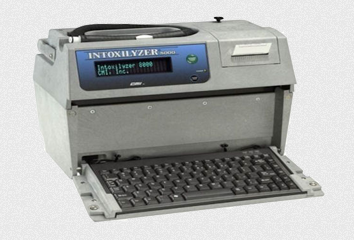
In an important disclosure decision from the Supreme Court of Canada (the “SCC”) provides guidance on legal standard imposed on Crown Prosecutors and policing services to disclosed historical maintenance records that pertain to the breathalyzer device used in the context of impaired driving investigations under section 253(1) of the Criminal Code of Canada (the “Code”) or their predicate sections. Critical to the SCC’s determination was the “likely relevancy” of the records sought by the defence. Despite a well-argued case by reputable and senior defence counsel from Calgary, Alberta, the SCC ruled, in Regina v. Gubbins, 2018, SCC 44 (and the companion cases), in an eight (8) to one (1) majority, as follows, in relevant part:
First, the historical maintenance records sought by Mr. Gubbins, through counsel, that related to the breathalyzer device used in the investigation of a charge of driving “over 80” was not “first-party disclosure”. Under the cases of Regina v. Stinchcombe, 1991 CanLII 45 (SCC), [1991] 3 S.C.R. 326 at pp. 336-40; Regina v. Quesnelle, 2014 SCC 46 (CanLII), [2014] 2 S.C.R. 390, at para. 11.and their pedigree, the Crown has a broad duty to disclose all relevant, non-privileged information in its possession or control to persons charged with criminal offences. Disclosure of this information allows the person charged to understand the case she or he has to meet and permits him or her to make full answer and defence to the charges. However, in this case, the SCC found that they were third party records, and the defence must demonstrate their “likely relevance” at an application for production. However, “time-of-test” records, which show how the device was operating when the accused’s sample was taken, are “obviously relevant” and therefore are first party disclosure.
On this concept, the “likely relevance” standard is significant, but not onerous. It allows courts to prevent speculative, fanciful, disruptive, unmeritorious, obstructive, and time consuming requests for production. What is more, the he duty of the police to disclose first-party material is limited to the “fruits of the investigation” and information “obviously relevant to the accused’s case” (at para. 21). Neither includes “operational records or background information.” In citing Reginav. Jacksonfrom the Ontario Court of appeal, the Court posited:
[22]The “fruits of the investigation” refers to the police’s investigative files, as opposed to operational records or background information. This information is generated or acquired during or as a result of the specific investigation into the charges against the accused. Such information is necessarily captured by first party/Stinchcombe disclosure, as it likely includes relevant, non-privileged information related to the matters the Crown intends to adduce in evidence against an accused, as well as any information in respect of which there is a reasonable possibility that it may assist an accused in the exercise of the right to make full answer and defence. The information may relate to the unfolding of the narrative of material events, to the credibility of witnesses or the reliability of evidence that may form part of the case to meet.
In its normal, natural everyday sense, the phrase “fruits of the investigation” posits a relationship between the subject matter sought and the investigation that leads to the charges against an accused.
This case is important and contributes to the existing case-law because the SCC’s previous decision in Reginav. St‑Onge Lamoureux, [2012] 3 SCR 187, 2012 SCC 57 (CanLII), did not decide that maintenance records are “obviously relevant,”and expert evidence establishes that the issue of whether a device was properly maintained is immaterial to its functioning at the time the sample was taken.
What is more, the Court held that the constitutionality of the statutory presumption of accuracyof breathalyzer devices is not jeopardized by the holding that historical maintenance records are third party records. The defence can use time-of-test records and testimony from the technician or officer involved to challenge the presumption. A defence is not illusory simply because it will rarely succeed. At paragraph 47, the Court stated:
The statutory presumption of accuracy refers to the specific results generated by the instrument at that time. The only question that must be answered is whether the machines were operating properly at the time of the test ― not before or after. The time-of-test records directly deal with this. The maintenance records, according to the expert evidence, do not.
Conversely, Justice Côté . dissented. In his decision, he held, that would have held that maintenance records are “obviously relevant” to rebutting the statutory presumption of accuracy, and are therefore first party disclosure. Justice Côté also would have held that the constitutionality of the statutory presumption of accuracy depends on the ability of the defence to access maintenance records. The rationale of this decision was summarized in the following terms:
Holding that only time‑of‑test records produced by the instrument can demonstrate malfunctioning effectively assumes that the machine is infallible. This confines the defence to arguments raising a doubt as to the instrument’s operation, contrary to Parliament’s intent to make malfunctioning and improper operation two distinct grounds for rebutting the presumption of accuracy. Recourse to third party disclosure will, in practice, be illusory. For an accused to have a real opportunity to show that an instrument was malfunctioning, an expert must have an evidentiary basis either to opine as to the possibility that the instrument malfunctioned or to establish the likely relevance of other information to be sought through third party disclosure. Providing nothing by way of first party disclosure forces accused persons and their experts to resort to conjecture and speculation.
And he concluded at paragraph 86:
[86] Finally, it is my view that disclosing maintenance records as first party records is not only consistent with St-Onge Lamoureux but also serves the interests of justice. Where maintenance records reveal no issues, their disclosure may compel the accused to plead guilty. Where they reveal certain issues and an expert is of the opinion that these issues may prove that the instrument malfunctioned, the maintenance records provide a basis for the accused to raise such a defence or to make subsequent O’Connor requests in a grounded, non-speculative manner.
While this decision may seem innocuous at first glance and of limited application to only breathalyzer devices, it is likely that the SCC has paved the path in anticipation for other technological devices used (or to be used) by policing services throughout Canada. The logic of the Court’s decision will have an impact on future disclosure motions that pertain to software and hard-ware used by police and their applicability to the constitutional rights of accused persons.
If you have been charged with impaired driving, “Over-80”, refusing to provide a sample, contact Mr. J. S. Patel, Barrister for a free thirty minute initial consultation over the phone. Contact 403-585-1960 to arrange an appointment.
Assault Assault Trials, Criminal Defence Lawyers for Sexual Assault Charges.
Evidence of sexual activity between a complainant and another person may be admitted if it is not tendered for a purpose prohibited by s.276(1) of the Criminal Code and it satisfies the admissibility test under s.276(2).The basic principles governing the application of s.276 were reviewed in Regina v. T.(M.), 2012 ONCA 511, per Watt J.A., on behalf of the court (at paras. 29-43):
The Governing Principles
Section 276 of the Criminal Codecreates a statutory rule of admissibility.Enacted in negative terms, the section, like other admissibility rules, is exclusionary; it precludes the admission of certain evidence. The exclusionary effect of the rule only becomes engaged when three requirements have been met. For
discussion purposes, these requirements, which are cumulative, may be characterized as:
i.offence charged;
ii.subject-matter; and
iii. purpose.
The exclusionary rule prohibits the person charged from introducing certain evidence (subject-matter) for a specific use (purpose) in proceedings for a listed crime (offence).
The “offence” requirement is satisfied where the proceedings in which evidence is tendered relate to a listed offence.Among the listed offences are the crimes charged here: sexual assault, sexual interference, and invitation to sexual touching.
The “subject-matter” requirement, which appears in both sections 276(1) and (2), is best expressed in the language of subsection (2):
Evidence … that the complainant has engaged in sexual activity other than the sexual activity that forms the subject-matter of the charge, whether with the accused or with any other person.
If the subject-matter of the proposed evidence falls outside the statutory language, the exclusionary terms of the provision do not apply.On the other hand, satisfaction of the subject-matter requirement, on its own, will not necessitate exclusion; the “purpose” requirement must also be satisfied.
The “purpose” requirement is crucial to the operation of this exclusionary rule, just as it is with the common law hearsay rule. To engage the exclusionary rule of s. 276, the proposed evidence must be offered to support either of two prohibited inferences grounded on the sexual nature of the activity:
i. that the complainant is more likely to have consented to the conduct charged; or
ii.that the complainant is less worthy of belief.
Where the purpose underlying the introduction of the evidence of extrinsic sexual activity is neither of those prohibited by s. 276(1), this exclusionary rule is not engaged.
Section 276(2) provides an exception to the exclusionary rule. To gain entry under this exception, evidence of the complainant’s extrinsic sexual activity must:
i.be of specific instances of sexual activity;
ii. be relevant to an issue at trial; and
iii. have significant probative value that is not substantially outweighed by the danger of prejudice to the proper administration of justice.
To determine whether the evidence should be admitted under this exception, the presiding judge must follow the procedure described in ss. 276.1 and 276.2 and consider the factors listed in s. 276(3).
The admissibility rules of s. 276 apply only where the evidence proposed for admission is of extrinsic sexual activity on the part of the complainant. A previous allegation of assault, without more, would fall outside the section: R. v. Gervais1990 CanLII 3701 (QC CA), (1990), 58 C.C.C. (3d) 141 (Que. C.A.), at p. 154. Questions that focus on the fact, rather than the details, of an allegation of sexual assault are not prohibited by the section: R. v. M. (A.G.)(1993), 26 C.R. (4th) 379 (Que. C.A.), at p. 393.
To be receivable in a criminal trial each piece of evidence must satisfy three requirements:
• relevance
•materiality
•admissibility.
These requirements are cumulative. Evidence that comes up short on any requirement is excluded from consideration by the trier of fact.
Thus, Section 276 of the Criminal Code permits cross-examination of sexual offence complainants on prior sexual activity only in certain circumstances. In ReginavR.V.,2018 ONCA 547 (CanLII),the Ontario Court of Appeal held that s.276 does not require that the defence particularize specific instances of alleged prior sexual activity. Rather the defence lawyer is only required to demonstrate that the prior sexual activity be “adequately identified”; and tied to a proper purpose. The court ordered a new trial for sexual assault where the defence was wrongly prevented from cross-examining the complainant on her prior sexual activity.
In that case, the Crown at trial had argued that the fifteen (15) year-old complainant’s pregnancy was consistent with her allegations. This implied that only the accused could be the father. The application judge dismissed the defence’s application under s.276 to cross-examine the complainant on whether this was true. The Court of Appeal held that “the Crown’s position amounted to this: we say you are the only one who could have impregnated the complainant but you are not allowed to question her about whether this is true” (at para. 27). This, the Court of Appeal found, was “patently unfair.”
The Ontario Court of Appeal held that although there was no “fixed rule” that required granting the s.276 application, the application judge erred by requiring the defence to articulate particularized “specific instances of sexual activity.” The sexual activity was adequately identified as any activity that could have caused the pregnancy. The court’s focus should be on the probative value of the line of questioning, not on the likelihood that the cross-examination will produce results. It was no substitute to permit the defence to simply ask the complainant whether she was telling the truth; the point of cross-examination is to challenge the witness’s answers.
The court also held the trial judge, who replaced the application judge before trial, erred by holding he lacked jurisdiction to revisit the application judge’s s.276 application. A trial judge always has jurisdiction to revisit prior rulings in the same trial, and this is also true where the trial judge has replaced another judge.
Being charged with a serious, violent crime like sexual assault, may call for the assistance of an Criminal Defence lawyer in Alberta or other provinces in Canada. A lawyer will review all the evidence about the alleged sexual assault; and advise his or her client on how best to fight any charges. If the accused was not taken into custody according to the letter of the law, a lawyer might be able to have the charges dropped. An accused client has the right to mount an aggressive defense with the knowledge that it is incumbent upon the Crown to prove guilt beyond a reasonable doubt.
If you have been charged with a sexual assault offence under the Criminal Code of Canada, contact Mr. J.S. Patel, Calgary Criminal Lawyer for an initial free consultation at 403-585-1960.
Criminal Lawyer in Calgary and Toronto, DUI, Over 80, Domestic Assault, Sexual Assault, Murder, Legal Aid,