In Regina v. Barton, 2021 ONCA 451 (RD), the Ontario Court of Appeal allowed the appellant’s appeal from his convictions for firearms-related offences.
During a warrantless search, police discovered a gun inside a planter located in a common hallway outside the appellant’s apartment. The next day, police executed a search warrant and found ammunition for the gun and a bulletproof vest inside the appellant’s apartment. The appellant was convicted after a trial by judge and jury. The defence had posited that the trial judge erred in concluding the semi-automatic handgun was not “obtained in a manner that infringed or denied” his rights under the Canadian Charter of Rights and Freedoms, given the causal, contextual, and temporal links he alleges between the search of the planter and what was conceded by the Crown to be unconstitutional police conduct in seeking to search his apartment without a warrant. In the alternative, the defence argued that the trial judge erred in finding that he did not have a reasonable expectation of privacy in the hallway or the planter.
On appeal, the Court of Appeal held that the trial judge erred in concluding that the gun was not “obtained in a manner” that infringed the appellant’s rights under the Charter. The court noted that there were causal, contextual, and temporal connections between the search of the planter and what was conceded by the Crown to be unconstitutional police conduct in seeking to search the appellant’s apartment without a warrant. Therefore, the gun was unconstitutionally obtained. The Court stated as follows, in relevant part:
[4] Police officers discovered the semi-automatic handgun as a result of a step they had taken to gain unlawful warrantless entry into Mr. Barton’s apartment. Specifically, they moved the planter in the hallway to assist their efforts in breaching the front door. After moving the planter, the officers observed a string protruding from its cylinder. Inferring that the string might be attached to a key that would give them warrantless entry to Mr. Barton’s apartment, the officers pulled the string which led to a bag secreted in the planter. They opened the bag and discovered the semi-automatic handgun inside.
[5] Since the semi-automatic handgun was discovered as a result of a step officers had taken to gain unlawful entry to the apartment, the discovery is causally connected to the Charterbreach: see, R. v. Goldhart, 1996 CanLII 214 (SCC), [1996] 2 S.C.R. 463, at paras. 33-35. The trial judge erred in finding otherwise.
Reference to the discovery of the gun had to be excised from the information to obtain the search warrant. A new trial was required to determine whether excision of the discovery of the gun from the warrant information would lead to a finding that the later warranted search was unconstitutional. The court ordered a new trial on all charges to determine whether excision of the discovery of the semi-automatic handgun from the warrant information will lead to a finding that the later warranted search was unconstitutional. This finding could, in turn, have an impact in deciding whether to exclude the semi-automatic handgun itself, since additional Charter breaches occurring during the same investigation can enhance the seriousness of each of the Charter breaches: see e.g., R. v. Davidson,2017 ONCA 257, 352 C.C.C. (3d) 420, at para. 48.
If you have been charged with a criminal offence, contact Mr. J.S. Patel, Calgary Criminal Defence Lawyer at 403-585-1960.
The application of mental health in the context of bail reviews was recently clarified in a recent decision from the Supreme Court of Canada in Regina v. Myers, 2019 SCC 18. The SCC confirmed animating and cardinal principle right out of the gate at paragraph 1:
“The right to liberty and the presumption of innocence are fundamental tenets of our criminal justice system. In the pre-trial context, release — at the earliest opportunity and in the least onerous manner — is the default presumption in Canadian criminal law. Pre-trial detention is the exception, not the rule.”
Those prefatory remarks permeate the entirety of the decision. In my view this decision addressed a critical gap in the jurisprudence.The query before the Court was determine the correct approach to a detention review under s. 525of the Criminal Code of Canada (the “Code”); and to explain the place of such a review within the larger context of pre-trial custody in Canada. The Court made the following salient points.
It emphasised that Judges and justices at bail hearings should always give very careful consideration to release plans that involve supervised treatment for individuals with substance abuse and mental health issues. Of importance, it stressed at paragraph 67 of the decision that the release into treatment with appropriate conditions will often adequately address any risk, and “we must not lose sight of the fact that pre-trial detention is a measure of last resort”. It noted that Parliament intended the s.525 review provisions to be a safeguard; and that Section 525 bail reviews are not restricted to cases in which there has been an unreasonable delay in bringing the accused to trial, although delay can be relevant to the court’s review.
The onus to apply for a s.525 review is on the prosecution, and accordingly an accused person or their defence counsel need not request a hearing. Detained persons are are entitled to a s.525 hearing. This applies even if they did not have an initial bail hearing. In such cases, the review judge must apply the “ladder principle” (see ReginaAntic, [2017 SCC 27); and determine the issue of bail de novo.
At the review hearing, the task of the judge must centre on the issue of whether “…the continued detention of the accused in custody justified within the meaning of s. 515(10) [the detention provisions]?” In this connection, the hearing is a review of the detention itself, not of any order made in a lower court, although errors in detention orders may justify revisiting the order. With great clarity, Court remarked at paragraph 63:
At the hearing, unreasonable delay is not a threshold that must be met before reviewing the detention of the accused. The overarching question is only whether the continued detention of the accused in custody is justified within the meaning of 515(10). In determining whether the detention of the accused is still justified, the reviewing judge may consider any new evidence or change in the circumstances of the accused, the impact of the passage of time and any unreasonable delay on the proportionality of the detention, and the rationale offered for the original detention order, if one was made. If there was no initial bail hearing, the s. 525 judge is responsible for conducting one, taking into account the time the accused has already spent in pre-trial custody. Ultimately, s. 525 requires a reviewing judge to provide accused persons with reasons why their continued detention is — or is not —justified. Finally, the judge should make use of his or her discretion under ss. 525(9) and 526 to give directions for expediting the trial and related proceedings where it is appropriate to do so. Directions should be given with a view to mitigating the risk of unconstitutional delay and expediting the trials of accused persons who are subject to lengthy pre-trial detention.
In terms of the reception of the evidence, the court may receive any evidence that is credible or trustworthy, unless it existed at the time of the initial bail hearing and is barred by the “due diligence” and “relevance” criteria. And finally, the reviewing judge must give directions to expedite the trial of persons in custody, and to ensure the accused will not be in a “time served” position before the trial date.
If you have been charged with a criminal offence and seeking a bail review on any of your conditions or are seeking you release, contact our office at 403-585-1960.
The Credibiity of Confidential Informants in Reviewing a Informaiton to Obtain a Warrant to Search a home
The credibility of a confidential informant is very important to the state’s case when endeavoring to uphold a warrant authorizing a search that is critical to the entire prosecution case. An accused person’s conviction was overturned recently by the Court of Appeal in Regina v. Herta, 2018 ONCA 927where the entire case for the Prosecution Service hinged on the credibility of a confidential informant. The Court permitted Mr. Herta’s appeal of his unsuccessful motion under Section 8 of the Canadian Charter of Rights and Freedoms at trial, excluded the drug evidence, and entered acquittals on all counts. The critical issue was the Information to Obtain the search warrant of a home. The critical issue was the Information to Obtain the search warrant of a home under the seminal authority of Reginav. Feeney, [1997] 2 S.C.R. 13;
The standard exacted, to review the warrant and ITO, is one of credibly-based probability, and requires proof of reasonable probability or reasonable belief. This standard requires more than an experienced-based “hunch” or reasonable suspicion, but it does not require proof beyond a reasonable doubt, or even the establishment of a prima facie case. In short, if the inferences of criminal conduct and the recovery of evidence are reasonable on the facts disclosed in the ITO, then the search warrant could have been issued.
In this case, the search of his home arose from the fact that an individual wanted by police (DC) was seen arriving there. The Information to Obtain (the “ITO”) the search warrant contained references from a confidential informant that this individual “DC” was armed. Consequently, the police obtained a search warrant for the house, which did not reveal a gun, but led police to find several illicit CDSA substances that formed the basis of the charges before the Provincial Court.
The Court of Appeal made it very clear that the indexed search warrant, in this case, rose or fell on the strength of the confidential informant’s tip; and consequently the Crown’s case. However, the trial judge was not tasked with a step six analysis from Regina v. Garofoli, 1990 CanLII 52 (S.C.C.). When reviewing a judicial authorization, the relevant question is not whether the reviewing Court would have granted the order. The question on review is whether or not the order could have issued. The test in this regard was set out by Sopinka J. in Garofoli, supra, as follows:
The reviewing judge does not substitute his or her view for that of the authorizing judge. If, based on the record which was before the authorizing judge as amplified on the review, the reviewing judge concludes that the authorizing judge could have granted the authorization, then he or she should not interfere. In this process, the existence of fraud, non-disclosure, misleading evidence and new evidence are all relevant, but, rather than being a prerequisite to review, their sole impact is to determine whether there continues to be any basis for the decision of the authorizing judge.
In reviewing the sufficiency of a warrant application, however, “the test is whether there was reliable evidence that might reasonably be believed on the basis of which the authorization could have issued” (R. v. Araujo, 2000 SCC 65, [2000] 2 S.C.R. 992 (S.C.C.), at para. 54 (emphasis in original)). The question is not whether the reviewing court would itself have issued the warrant, but whether there was sufficient credible and reliable evidence to permit a justice of the peace to find reasonable and probable grounds to believe that an offence had been committed and that evidence of that offence would be found at the specified time and place.
This is notwithstanding the fact there were heavy redactions in the ITO. However, since the redacted ITO did not contain objective facts supporting the informant’s credibility, no confidence could be safely placed in his/her information. What is more, insufficient corroborative evidence was present to justify the belief that DC was in the residence with a gun. The confirmatory information available related to things that many people would know about this person: DC.
Finally, the confidential informant’s tip was not sufficiently compelling. This is because it did not connect DC’s possession of a gun to the residence in question; and there was nothing in in the ITO that connected DC to the residence. The ITO was also potentially misleading by suggesting that DC lived at the house.
Based on the totality of the circumstances, the Court could not support the warrant and that the accused’s s.8 Charterrights were breached.
As such, the Court engaged in a s. 24(2) Charter analysis as required by Regina v. Grant2009 SCC 32 (SCC). It ruled that the impact of the breach on the Charter-protected interests of the accused weighed heavily in favour of exclusion, given the highly invasive nature of the search. Despite the importance of society’s interest in the adjudication of this case on the merits, the exclusion of evidence was warranted. Acquittals were entered on this basis.
If you have been charged with a drug related offence involving the use of Search Warrant by the police, call Mr. J.S. Patel, Barrister for a consultation: 403-585-1960.
The use of a driver’s statement in a jury trial for impaired driving charges.
The application of the rules regarding the assessment of an accused person’s statement as raised in R. v. W.(D.),1991 CanLII 93 (SCC)was considered in Regina v. Bacci, 2018 ONCA 928, where the Court of Appeal in Ontario quashed the accused’s conviction for impaired operation causing bodily harm, two counts of driving over 80 causing bodily harm contrary to s.255(2.1) of the Criminal Code, and two counts of dangerous driving causing bodily harm contrary to s.249(3) of the Criminal Code. This was due to an error errors in the trial judge’s W.(D.) instruction in his recharge to the jury.
The facts of the case were simply as follows. The accused and her four passengers were returning to the accused’s family cottage when their car flipped over after the accused failed to negotiate a curve. All four passengers testified at trial. The accused told the police “I don’t know what happened. The car just lost control.” The Crown expert witness admitted that there was a probability, albeit low, that the accident could have been caused by a mechanical failure.
Central to the success of the appeal hinged on the W.(D.) instruction relating to the accused’s statement. Again, the purpose of this instruction was famously described by the Supreme Court of Canada in the following clear terms:
First, if you believe the evidence of the accused, obviously you must acquit.
Second, if you do not believe the testimony of the accused but you are left in reasonable doubt by it, you must acquit.
Third, even if you are not left in doubt by the evidence of the accused, you must ask yourself whether, on the basis of the evidence which you do accept, you are convinced beyond a reasonable doubt by that evidence of the guilt of the accused.
The original charge to the jury was:
I want to mention one particular piece of evidence you heard because it is deserving of special treatment according to the law.
[1] You heard from Alexandra Jones that she heard Megan Bacci state at the accident scene, “I do not know what happened. My car just lost control.” If you believe that this what was reported by Alexandra Jones was in fact said by Megan Bacci and if you accept Megan Bacci’s explanation that her vehicle just lost control and you find this lose [sic] of control was caused entirely by mechanical failure, you must find Megan Bacci not guilty of impaired operation causing bodily harm, operation of a motor vehicle with a blood alcohol concentration of over 80 causing bodily harm and dangerous driving causing bodily harm. You might still find her guilty of the lesser included offences in counts 1 through 4. Even if you do not accept that Megan Bacci said what was reported by Alexandra Jones or accept Megan Bacci’s explanation for what happened or accept the lose [sic] of control was caused entirely by mechanical failure, if it leaves you with a reasonable doubt about whether Megan Bacci caused the accident and the accompanying bodily harm, you must find her not guilty of those offences because the Crown would have failed to prove an essential element, that is causation of those offences beyond a reasonable doubt. You may still, however, find her guilty of the lesser and included offences in counts 1 through 4.
[2] Even if the evidence does not 1eave you with a reasonable doubt about whether Megan Bacci caused the accident, you may convict Megan Bacci only if the rest of the evidence that you do accept proves her guilt on that essential element of causation beyond a reasonable doubt.
The recharge to the jury was:
The one last area I want to mention the one particular piece of evidence you heard because it deserves special treatment and that’s what Megan Bacci said that what Alexandra Jones stated that she heard that is, “I do not know what happened, my car just lost control.”
I want to repeat this to you. If you believe that what was reported by Alexandra Jones was in fact said by Megan Bacci, and if you accept Megan Bacci’s explanation given to Alexandra Jones that her vehicle just lost control, and you find that this lost [sic] of control that is referred to was not caused by her in any way then you must find Megan Bacci not guilty of impaired operation causing bodily harm, operation of a motor vehicle with a blood alcohol concentration over 80 thereby causing bodily harm and dangerous driving causing bodily harm. You might still find her guilty of the lesser and included offences of 1through 4.
So “I do not know what happened, my car just lost control”, that is from Alexandra Jones about what Megan Bacci said. So one, you have to consider whether you believe that what Alexandra Jones said was in fact said by Megan Bacci. You have to accept that that’s Megan Bacci’s explanation that the vehicle just lost control, you have to accept that explanation by her and you have to find that this loss of control that’s alluded to, that’s referred was not caused by her any way, the lost [sic] of control of the vehicle was not caused by her in any way.
If you find those three things then you must find her not guilty on counts 1through 6. You still may find her guilty of the lesser and included counts, charges in counts 1 through 4.
I hope that’s cleared it up. If not, I’m sure you will have a question but you’re free to go now.
The Court of Appeal held that the original charge to the jury did not contain any errors concerning the interpretation of the above noted statement. As such it did not cause the jury to give extra scrutiny to the defence evidence and it inured to the benefit of the accused. What is more, the trial judge did not err in his original charge when he instructed the jury that the accused must be acquitted if they found that the loss of control was “entirelycaused by mechanical failure,” as it was evident that this was not the only basis for acquittal (emphasis added). This is because the second and third arms/prongs of the W.(D.) instruction made it clear that an acquittal was possible via other paths. Thus, when the entirely instruction is reviewed in as a whole, the jury charge adequately conveyed to the jury that they were not engaged in a credibility contest.
In the recharge, the trial judge similarly did not err by providing an exculpatory interpretation to the statement. However, the trial judge failed to contextualize the recharge and identify that he was correcting a previous error. In addition, the trial judge also said nothing about the second and third branch of W.(D.)in the recharge. That served to only served to confuse the jury. Due to the foregoing, this constituted a non-direction amounting to misdirection with respect to a crucial aspect of the defence. The Court stated: “In these circumstances the jury is entitled to instructions which were clear, correct and comprehensive,as S.(W.D.) mandates. Unfortunately, the last word that the jury heard was an incorrect and incomplete instruction on critical issues.”
The defence appeal was allowed, the conviction was overturned, and a new trial was ordered.
If you have been charged with impaired driving causing bodily harm and/or a similar criminal driving related offence, contact Mr. J. S. Patel, Barrister for an initial consultation at 403-585-1960.
Supreme Court of Canada rules that Historical Maintenance Records for a Breathalyzer are not first party disclosure.
In an important disclosure decision from the Supreme Court of Canada (the “SCC”) provides guidance on legal standard imposed on Crown Prosecutors and policing services to disclosed historical maintenance records that pertain to the breathalyzer device used in the context of impaired driving investigations under section 253(1) of the Criminal Code of Canada (the “Code”) or their predicate sections. Critical to the SCC’s determination was the “likely relevancy” of the records sought by the defence. Despite a well-argued case by reputable and senior defence counsel from Calgary, Alberta, the SCC ruled, in Regina v. Gubbins, 2018, SCC 44 (and the companion cases), in an eight (8) to one (1) majority, as follows, in relevant part:
First, the historical maintenance records sought by Mr. Gubbins, through counsel, that related to the breathalyzer device used in the investigation of a charge of driving “over 80” was not “first-party disclosure”. Under the cases of Regina v. Stinchcombe, 1991 CanLII 45 (SCC), [1991] 3 S.C.R. 326 at pp. 336-40; Regina v. Quesnelle, 2014 SCC 46 (CanLII), [2014] 2 S.C.R. 390, at para. 11.and their pedigree, the Crown has a broad duty to disclose all relevant, non-privileged information in its possession or control to persons charged with criminal offences. Disclosure of this information allows the person charged to understand the case she or he has to meet and permits him or her to make full answer and defence to the charges. However, in this case, the SCC found that they were third party records, and the defence must demonstrate their “likely relevance” at an application for production. However, “time-of-test” records, which show how the device was operating when the accused’s sample was taken, are “obviously relevant” and therefore are first party disclosure.
On this concept, the “likely relevance” standard is significant, but not onerous. It allows courts to prevent speculative, fanciful, disruptive, unmeritorious, obstructive, and time consuming requests for production. What is more, the he duty of the police to disclose first-party material is limited to the “fruits of the investigation” and information “obviously relevant to the accused’s case” (at para. 21). Neither includes “operational records or background information.” In citing Reginav. Jacksonfrom the Ontario Court of appeal, the Court posited:
[22]The “fruits of the investigation” refers to the police’s investigative files, as opposed to operational records or background information. This information is generated or acquired during or as a result of the specific investigation into the charges against the accused. Such information is necessarily captured by first party/Stinchcombe disclosure, as it likely includes relevant, non-privileged information related to the matters the Crown intends to adduce in evidence against an accused, as well as any information in respect of which there is a reasonable possibility that it may assist an accused in the exercise of the right to make full answer and defence. The information may relate to the unfolding of the narrative of material events, to the credibility of witnesses or the reliability of evidence that may form part of the case to meet.
In its normal, natural everyday sense, the phrase “fruits of the investigation” posits a relationship between the subject matter sought and the investigation that leads to the charges against an accused.
This case is important and contributes to the existing case-law because the SCC’s previous decision in Reginav. St‑Onge Lamoureux, [2012] 3 SCR 187, 2012 SCC 57 (CanLII), did not decide that maintenance records are “obviously relevant,”and expert evidence establishes that the issue of whether a device was properly maintained is immaterial to its functioning at the time the sample was taken.
What is more, the Court held that the constitutionality of the statutory presumption of accuracyof breathalyzer devices is not jeopardized by the holding that historical maintenance records are third party records. The defence can use time-of-test records and testimony from the technician or officer involved to challenge the presumption. A defence is not illusory simply because it will rarely succeed. At paragraph 47, the Court stated:
The statutory presumption of accuracy refers to the specific results generated by the instrument at that time. The only question that must be answered is whether the machines were operating properly at the time of the test ― not before or after. The time-of-test records directly deal with this. The maintenance records, according to the expert evidence, do not.
Conversely, Justice Côté . dissented. In his decision, he held, that would have held that maintenance records are “obviously relevant” to rebutting the statutory presumption of accuracy, and are therefore first party disclosure. Justice Côté also would have held that the constitutionality of the statutory presumption of accuracy depends on the ability of the defence to access maintenance records. The rationale of this decision was summarized in the following terms:
Holding that only time‑of‑test records produced by the instrument can demonstrate malfunctioning effectively assumes that the machine is infallible. This confines the defence to arguments raising a doubt as to the instrument’s operation, contrary to Parliament’s intent to make malfunctioning and improper operation two distinct grounds for rebutting the presumption of accuracy. Recourse to third party disclosure will, in practice, be illusory. For an accused to have a real opportunity to show that an instrument was malfunctioning, an expert must have an evidentiary basis either to opine as to the possibility that the instrument malfunctioned or to establish the likely relevance of other information to be sought through third party disclosure. Providing nothing by way of first party disclosure forces accused persons and their experts to resort to conjecture and speculation.
And he concluded at paragraph 86:
[86] Finally, it is my view that disclosing maintenance records as first party records is not only consistent with St-Onge Lamoureux but also serves the interests of justice. Where maintenance records reveal no issues, their disclosure may compel the accused to plead guilty. Where they reveal certain issues and an expert is of the opinion that these issues may prove that the instrument malfunctioned, the maintenance records provide a basis for the accused to raise such a defence or to make subsequent O’Connor requests in a grounded, non-speculative manner.
While this decision may seem innocuous at first glance and of limited application to only breathalyzer devices, it is likely that the SCC has paved the path in anticipation for other technological devices used (or to be used) by policing services throughout Canada. The logic of the Court’s decision will have an impact on future disclosure motions that pertain to software and hard-ware used by police and their applicability to the constitutional rights of accused persons.
If you have been charged with impaired driving, “Over-80”, refusing to provide a sample, contact Mr. J. S. Patel, Barrister for a free thirty minute initial consultation over the phone. Contact 403-585-1960 to arrange an appointment.
In Regina v. Vassel, 2018 ONCA 721, the Ontario Court of Appeal allowed the accused’s appeal, set aside his conviction for second degree murder, and ordered a new trial.
Expert Evidence on cell phones and towers in Drugs Trafficking Cases
The Background Facts
The victim was a drug dealer who was shot and killed in the course of a drug deal gone bad. He was also robbed of a quarter-pound of marijuana during the incident.
The relevant facts as recited by the Court of Appeal were: (a)Husam Degheim was a drug dealer who sold marijuana (the ‘deceased’). A middleman proposed a deal. The deceased agreed. The sale of one-quarter pound of marijuana was to take place near a shopping centre in Mississauga. The buyers and seller would meet there. A simple exchange. Money for drugs. Drugs for money. Or so the deceased thought. However, the buyers had different thoughts: (i) no money for drugs; (ii) no drugs for money; (iii) drugs for free; (iv) get the drugs and leave. On the day of the indexed offences, the buyers and seller made their separate ways to the appointed place of sale. Three (3) vehicles parked next to one another. As things began to unfold, the deceased sensed that the simple exchange of drugs for money and money for drugs was not unfolding as it should. He started his vehicle. He intended to frustrate whatever the buyers had in mind. Regrettably, the deceased was unable to escape; and two (2) men approached his van, one of which had a gun. Degheim was shot dead while he sat in the driver’s seat of his van. His wife was beside him in the passenger seat. The drugs were stolen and everyone fled. Mr. Vassel was arrested for the unlawful killing of Degheim. The operating Crown theory was that Mr. Vassel was the shooter. He was convicted for second degree murder at his jury trial.
The Evidence Called at Trial
The Crown alleged that he was the shooter. A jury found him guilty of second degree murder. The main issue at the trial was the identity of the shooter. The Crown Prosecutors called the following relevant evidence at the jury trial:
(a) the testimony of another participant in the robbery and shooting who identified the accused, Mr. Vassel, as the shooter and whose evidence was subject to a Vetrovec caution (see: Vetrovecv. The Queen, [1982] 1 SCR 811, 1982 CanLII 20 (SCC)– this is a caution that ought to be given to a jury generally when considering evidence from disreputable or unsavory witnesses.
(b) circumstantial evidence from several different witnesses, including evidence of post-offence conduct by the accused, which tended to link the accused to the robbery and shooting; and
(3) evidence of eyewitness descriptions of the shooter generally coinciding with the appearance of the accused.
Defences Raised: Alibi and Third Party Suspect
The criminal defence lawyers for Mr. Vassel posited alibi as a defence. That defence was supported by: (i) the testimony of the accused regarding his whereabouts and activities at the time of the shooting; (ii) cellphone triangulation evidence indicating that a cellphone belonging to the accused was away from the crime scene; and (iii) the testimony of a defence witness that further confirmed the accused’s claim that he was elsewhere at the time of the shooting. The other defence raised by counsel for the accused was to invite the jury to consider the possibility that either of two third parties was the shooter. This was through the lens of a third party (3rd) suspect application.
Errors made by the Trial Court.
The Court of Appeal held that the trial judge committed several errors:
First, the Court of Appeal held that the trial judge erred in admitting evidence adduced by the Crown in cross-examination concerning cellphone usage by drug traffickers. That evidence was objected to at trial on the basis that the said evidence failed to satisfy the Mohan(expert testimony) criteria at the first step or stage of the expert evidence analysis. That evidence should have been excluded on the basis that it was evidence of expert opinion adduced from a witness who was not properly qualified to give it. On this issue, the Court of Appeal concluded:
“If the testimony the Crown adduced from Kristi Jackson in cross-examination consisted in whole or in part of expert opinion on a subject matter beyond the qualifications defence counsel had already established, it was incumbent on the Crown to qualify her as an expert on that subject matter. Crown counsel made no effort to do so before eliciting the opinions he sought, although he did some backfilling after the opinion was given. To the extent that Ms. Jackson’s evidence simply recounted what the Rogers billings revealed, it was not evidence of expert opinion. But to the extent that she offered the opinion about the character of the phone – “drug” vs. “family and friends” – her testimony reflected an opinion that she had not been properly qualified to give.”
Second, the Appeal Court found that the learned Trial Justice erred by erred in instructing the jury to consider a portion of the accused’s evidence with caution or particular care. Specifically on the use of the prior statements.
Third, the Justice had erred in law by failing to instruct the jury correctly about use of the exculpatory evidence provided by eyewitnesses to the robbery and shooting.
All the remaining grounds of the appeal were dismissed by the Court of Appeal. In dismissing those grounds, the court on review held as follows: (i) the trial judge did not err in failing to admit evidence of the accused’s prior out-of-court statements; and (ii) he did not err in refusing to allow the accused to re-open the defence case to respond to a breach of the rule in Browne v. Dunn.
Finally, the court refused to apply the curative provisoin s.686(1)(b)(iii) of the Criminal Code. A curative provisois considered under section s. 686(1)(b)(iii) of the Criminal Code of Canada, and among other things, it allows an appellate court to consider whether to dimiss an appeal despite the errors of the lower court, if there were no miscarriage(s) of justice or the errors of the lower Court(s) were harmless. In combination of the above noted issues, these errors were not harmless. This is because the evidence against the appellant was not overwhelming. What is more, the main source was the testimony of a Vetrovec witness (see above). Finally, the jury deliberated over five (5) days and twice (2x) reported a deadlock. Based on the foregoing, this was not a case in which the curative proviso can be applied.
If you have been charged with a criminal offence and the matter is likey to proceed to a jury trial, it is important to ensure that sufficient and accurate representations are made on the Court record to that the correct jury charges are addressed.
Contact Mr. J. S. Patel, Barrister for a free initial thirty minute consultation regarding your matter.
Dangerous Driving under the Criminal Code of Canada
In Regina v. Raj, 2018 ONCA 623 (CanLII) the Ontario Court of Appeal dealt with the conviction appeal for an accused person involving a commercial dump-truck operator. It was a case Dangerous Driving involving alcohol and the use of a Commercial Vehicle. The facts underpinning the appeal involved a proven allegation that the accused had driven the raised box of his dump truck into an over-pass. The accused was/is a professional truck driver. On July 31, 2014, he was driving a commercial dump truck on the Queen Elizabeth Highway (“QEW”). There was a trailer attached to the truck whose box could be raised and lowered using a system of buttons and levers in the truck called the Power Take-off (“PTO”) system. That day, the appellant had left the PTO lever in the ‘On’ position. Under certain circumstances, leaving the PTO engaged permitted the trailer to rise.
The accident scene was chaotic and dangerous, and the police placed the accused in a police car for 2.5 hours for his own safety. The following arguments were raised by the accused’s criminal appeal lawyers: First, it was posited that the trial judge erred by concluding that the appellant’s confinement in the police cruiser for 2.5 hours was not an arbitrary detention contrary to s. 9 of the CanadianCharter of Rights and Freedoms. Second, if that argument was successful, then it was argued that result would be that the police breached both his s. 9 and s. 10 Charter rights. This, it was argued, would call for a reappraisal of the trial judge’s s. 24(2) analysis and lead to a different result – the exclusion of the evidence relating to the smell of alcohol on the appellant’s breath. The Court disagreed. It said that the principal, and continuing, purpose of the appellant’s detention was his own safety. His truck had caused a terrible accident with extensive damage to vehicles and a bridge and injuries to several people. The police noticed the appellant walking around a dangerous accident scene and sitting on a guardrail very close to a damaged and collapsing girder. Importantly, his truck was crushed.
The Ontario Court of Appeal also upheld the decision of the trial judge admitting evidence of a smell of alcohol on the accused’s breath even though the police did not provide access to counsel during the detention, breaching s.10(b) of the Charter. The police conduct was only a mistake and not deliberate misconduct, and the police would have smelled the alcohol even if they had acted properly.
What is more, the Court of Appeal upheld the trial judge’s finding that the accused’s conduct was a marked departure from a reasonable person’s driving. This was mostly due, in large part on the accused’s alcohol consumption, and his failure over forty (40) seconds to notice that the box of his dump truck had raised. The court said that prior to colliding with the bridge superstructure the appellant drove a one (1) kilometer distance for forty (40) seconds without detecting the rising dump box despite its effect on the truck’s handling and despite it being clearly visible from all of the truck’s mirrors.Given all the factors, the Court of Appeal dismissed the possibility of the that period of time constituting an “momentary inadvertence.”
Refusal to Provide a Breath Sample. Call Mr. J. S. Patel, Criminal Lawyer at 403-585-1960 for a consultation.
In Regina v. Suter, 2018 SCC 34, a 6:1 majority of the Supreme Court of Canada allowed the accused’s appeal in part. The Court set aside his 26-month sentence of imprisonment, imposed by the lower sentencing court, for the offence of refusing to provide a breath sample knowing that he caused an accident resulting in a death (Criminal Code, s.255(3.2)),and imposed a sentence of time served of just over ten (10) and a (1/2) half months.
That said, the circumstances of this case are unique as related recently on CBC news. The fatal accident was caused by a non-impaired driving error, and Mr. Suter refused to provide the police with a breath sample because he received bad legal advice. The lawyer he called from the police station expressly told him not to provide a breath sample, and Mr. Suter demurred. Added to this, sometime after the accident, Mr. Suter was attacked by a group of vigilantes who used a set of pruning shears to cut off his thumb. His wife was also attacked in a separate incident. He later pleaded guilty to the s.255(3.2) offence and the other charges were withdrawn.
The sentencing judge imposed a sentence of four (4) months’ imprisonment plus a thirty (30) month driving prohibition. The Judge found that the accident was caused by a non-impaired driving error. He also found that the accused’s refusal to provide a breath sample was the result of bad legal advice and was a mistake of law, which fundamentally changed the accused’s moral culpability. In addition, he noted several other mitigating factors, and also took into account the violent vigilante actions against the accused. However, the Court of Appeal, the Court of Appeal disagreed with this sentence. The Appeal court increased the custodial portion of the sentence to twenty-six (26) months. The court found that: the deficient legal advice did not constitute a mistake of law and it could not be used to mitigate the accused’s sentence; the sentencing judge failed to consider, as an aggravating factor, that the accused chose to drive while distracted in the context of his health and pre-existing alcohol problems; and the sentencing judge erred by taking the vigilante violence into account.
The majority of the Supreme Court held that both the sentencing judge and the Court of Appeal committed errors in principle that resulted in the imposition of unfit sentences. The majority held as follows:
The Court of Appeal erred by effectively sentencing the accused for the uncharged offence of careless driving or dangerous driving causing death. A further error was committed by the Court of Appeal in failing to consider the vigilante violence suffered by the accused. The majority stated that vigilante violence against an offender for his or her role in the commission of an offence is a collateral consequence that should be considered — to a limited extent — when crafting an appropriate sentence.
What is more, the sentencing judge erred in finding that the accused was acting under a mistake of law when he refused to provide the police with a breath sample and that this factor fundamentally changed the accused’s moral culpability. He also erred in giving undue weight to the accused’s non-impairment as a mitigating factor.
Taking into account the attenuating factors in the case, the majority of the Supreme Court of Canada concluded that a sentence of 15 to 18 months’ imprisonment would have been a fit sentence at the time of sentencing. The majority held, however, that in the circumstances of this case – the accused had already served just over 10 and a half months of his custodial sentence and had spent almost nine months waiting for the court’s decision – it would not be in the interests of justice to re-incarcerate the accused.
The final dissenting opinion came from Justice Gascon. His decision was predicated on principles of deference towards the sentencing judge. Justice Gascon would have set aside the 26-month sentence of imprisonment imposed by the Court of Appeal and restored the four-month sentence imposed by the sentencing judge. Gascon J. held that there was no legal basis to justify appellate intervention with the initial sentence in the case.
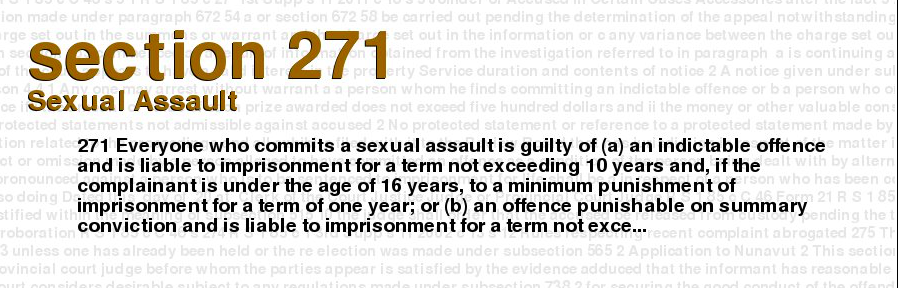
Defence in mistaken belief in consent for sexual assault
In Reginav. Donnelly, 2018 ONCA 575 (CanLII), the Ontario Court of Appeal set aside the accused’s conviction for sexual assault and ordered a new trial. In this case, the complainant was a woman who had been forced into the sex trade. This complainant had testified that she went along with oral and protected vaginal sex, but that during intercourse, the accused performed certain acts, and removed his condom and continued vaginal intercourse without her consent. According to the complainant, during the sexual intercourse the appellant pulled a strap-on out of his drawer and asked if they could use it. The complainant said that she told the appellant no but he proceeded to penetrate her with it. Further she testified that the appellant removed his condom and continued vaginal intercourse, despite the fact that she had told him to keep the condom on.
The accused/appellant flatly denied these allegations. In his testimony, the appellant admitted to the oral and protected vaginal sex, but denied that they had sex without a condom or that he used a strap-on. He also denied ejaculating into the complainant’s vagina but testified that he ejaculated onto her face with her permission. Typically, such evidence would warrant the application of the use of the legal test in Regina v. W(d), [1991] 1 SCR 742, 1991 CanLII 93 (SCC) where ideally, the appropriate instructions on the issue of credibility should be given, not only during the main charge, but on any recharge. A trial judge might well instruct the jury on the question of credibility along these lines:
First, if you believe the evidence of the accused, obviously you must acquit.
Second, if you do not believe the testimony of the accused but you are left in reasonable doubt by it, you must acquit.
Third, even if you are not left in doubt by the evidence of the accused, you must ask yourself whether, on the basis of the evidence which you do accept, you are convinced beyond a reasonable doubt by that evidence of the guilt of the accused.
On appeal, the accused argued that the trial judge erred by placing the defence of honest but mistaken belief to the jury, since it was entirely inconsistent with his testimony denying that the acts in question took place. The court of appeal agreed with that argument because there was “no air of reality” to that defence. An “air of reality” was defined by the Supreme Court of Canada, in the following way in Reginav. Cinous, [2002] 2 SCR 3, 2002 SCC 29(CanLII):
“A defence should be put to a jury if, and only if, there is an evidential foundation for it. A trial judge must thus put to the jury all defences that arise on the facts, whether or not they have been specifically raised by an accused, but he has a positive duty to keep from the jury defences lacking an evidential foundation — or air of reality. This is so even if the defence is the only defence open to the accused. The air of reality test imposes a burden on the accused that is merely evidential, rather than persuasive. In applying the air of reality test, a trial judge considers the totality of the evidence, and assumes the evidence relied upon by the accused to be true. The threshold determination by the trial judge is not aimed at deciding the substantive merits of the defence. That question is reserved for the jury. The trial judge does not make determinations about the credibility of witnesses, weigh the evidence, make findings of fact, or draw determinate factual inferences. Nor is the air of reality test intended to assess whether the defence is likely to succeed at the end of the day. The question for the trial judge is whether the evidence discloses a real issue to be decided by the jury, and not how the jury should ultimately decide the issue.”
Furthermore, the manner in which it was put to the jury obscured the accused’s actual defence and position on what happened. The trial judge misstated the accused’s position by telling the jury that the accused honestly believed that the complainant had consented to the acts in question when he clearly testified that the acts did not take place. The charge would only serve to confuse the jury and a new trial was needed.
Being charged with a serious, violent crime like sexual assault, may call for the assistance of an Criminal Defence lawyer in Alberta or other provinces in Canada. A lawyer will review all the evidence about the alleged sexual assault; and advise his or her client on how best to fight any charges. If the accused was not taken into custody according to the letter of the law, a lawyer might be able to have the charges dropped. An accused client has the right to mount an aggressive defense with the knowledge that it is incumbent upon the Crown to prove guilt beyond a reasonable doubt.
If you have been charged with a sexual assault offence under the Criminal Code of Canada, contact Mr. J.S. Patel, Calgary Criminal Lawyer for an initial free consultation at 403-585-1960.
Aiding and abetting, murder charges and its application in a jury trial.
The legal concept of “aiding and betting” in the context of Criminal Law has presented some difficulties in its application in a number of cases throughout Canada. This criminal law concept applies to varying degrees depending on the nature of the charge under the Criminal Code of Canada (the “Code”). Only occasional mention is made of the alternative basis for finding someone to be a party, the so-called common purpose provision in s.21(2). Subsection 21(1) of the Code provides as follows:
Every one is a party to an offence who(a) actually commits it,(b) does or omits to do anything for the purpose of aiding an any person to commit it, or(c) abets any person in committing it.
In very general terms, while it is common to speak of the concept of aiding and abetting as a singular concept, these two conceptstogether, the two concepts are distinct, and liability can flow from either one. Broadly speaking, to aid under s.21(1)(b) of the Criminal Codemeans to assist or help the actor. To abet within the meaning of s.21(1)(c) includes encouraging, instigating, promoting, or procuring the crime to be committed: Regina v. Briscoe, 2010 SCC 13, at para. 14. :
[14] The actus reus of aiding or abetting is doing (or, in some circumstances, omitting to do) something that assists or encourages the perpetrator to commit the offence. While it is common to speak of aiding and abetting together, the two concepts are distinct, and liability can flow from either one. Broadly speaking, “[t]o aid under s. 21(1)(b) means to assist or help the actor. . . . To abet within the meaning of s. 21(1)(c) includes encouraging, instigating, promoting or procuring the crime to be committed”: Regina v. Greyeyes, [1997] 2 S.C.R. 825, at para. 26. The actus reus is not at issue in this appeal. As noted earlier, the Crown argued at trial that Mr. Briscoe was both an aider and an abettor. The trial judge’s finding that Mr. Briscoe performed the four acts of assistance described above is not disputed.
Under the most applicable concepts of criminal law (at the time of writing), it is irrelevant whether an accused personally committed a crime or aided/abetted the offence, which is why the Crown need not specify in an indictment the exact role the accused played in the offence: Reginav. Pickton, 2010 SCC 32. Thus, in Regina v. McKay, 2012 ABCA 310, even though aiding and abetting are distinct concepts, there was no error in the trial judge’s characterization that the accused did “aid and abet” the commission of the offence. This was simply the judge’s way of describing the accused as a party to the offence. The following are two (2) recent examples of how these concepts come to fruition in Criminal law.
Recently, the Ontario Court of Appeal in Regina v. Mendez, 2018 ONCA 354, the Court set aside jury convictions for first degree murder against the two (2) accused and ordered a new trial. The deceased was shot by one (1) person, and the Crown Prosecution’s theory was that the two (2) accused acted as parties. However, it was unclear who had actually shot the deceased. The trial judge’s instructions to the jury on planning and deliberation listed the evidence supporting the Crown’s theory, but left out the evidence supporting the defence position that there was insufficient evidence that the non-shooter had aided or abetted the shooter. The instructions also failed to relate the evidence to the elements of aiding and abetting but merely invited the jury to consider whether the two accused “acted jointly.”The Crown’s case was weak on the aiding or abetting of the non-shooter, but the jury was not equipped by the trial judge’s instructions to consider the weaknesses.
The Ontario Court of Appeal held that the accused persons’ post-offence conduct — changing clothes, flight, and providing a false alibi — had little probative value regarding the non-shooter’s role. Despite the risk of the jury’s misuse of this evidence and the weakness of the Crown’s case on aiding and abetting, the verdict was not unreasonable and the court did not enter an acquittal. However, a new trial was ordered..
In Reginav. Zoldi, 2018 ONCA 384, the Ontario Court of Appeal allowed the accused’s appeal against his conviction for second degree murder and ordered a new trial on second degree murder. The Crown did not appeal the accused’s acquittal with respect to first degree murder.
The basis of granting the appeal was due to the fact that the jury was misdirected on the required state of mind for an aider or abettor to murder, being instructed that it was sufficient that the accused knew that the principal intended to kill or cause him bodily harm likely to result in deathand be reckless as to whether death ensued. The correct procedure require that the jury should have been instructed that the accused must have known that the principal intended to cause death or that the principal meant to cause bodily harm that the principal knew was likely to cause death and was reckless as to whether death ensued.
The jury was instructed that two (2) decision trees were being provided, one (1) for principals (of the indexed offence); and the other for aiders and abettors. The judge delivered his instructions on principal actor liability, followed by aiding and abetting liability. Given the structure of the charge, the Court of Appeal was not satisfied that the jury would have transferred the mens reafor a principal actor into their deliberations regarding the mental state for an aider or abettor to murder. The Ontario Court of Appeal held that the trial judge was right to tell the jury that the analysis between the modes of participation was different. Having had the required different analysis highlighted for them, though, the jury may have thought that, in the context of aiding and abetting, the absence of knowledge of the principal’s subjective foresight of death was by design. The Court stated the following in relevant part at paragraph 37 of the decision:
[37] Given the structure of the charge, I am not satisfied that the jury would have transferred the mens rea for a principal actor into their deliberations regarding the mental state for an aider or abettor to murder. To be clear, the trial judge was right to tell the jury that the analysis between the modes of participation was different. Having had the required different analysis highlighted for them, though, the jury may have thought that, in the context of aiding and abetting, the absence of knowledge of the principal’s subjective foresight of death was by design.
Another error idenfitied by the Crimianl laws as acknowledged by the Court of Appeal was the trial judge’s definition of recklessness under s.229(a)(ii) and the Trial Court’s instruction to the jury that it amounted to seeing the risk that the complainant could ( as opposed to would likely ) die from the injury to be inflicted.. This this error may have been otherwise inconsequential, but it was compounded by the erroneous instruction regarding the accused’s need to know the principal’s subjective foresight of death:
As the jury was instructed only to consider the decision tree that concerned “aiding and abetting decision tree if they failed to reach a unanimous verdict of guilt for first degree murder, the fact that the jury asked a question with respect to the aiding and abetting decision tree showed that they had not achieved that unanimity. By putting the query to the trial court whether there was a distinction between intent to kill and intent to cause bodily harm likely to result in death indicated that the jury very possibly, if not likely, were deliberating under a misapprehension as to whether the accused was required to know of the principal’s subjective foresight of death. Unfortunately, the trial judge’s answer to the jury repeated the earlier erroneous instructions and indicated that the jury could convict the accused as an aider or abettor without knowing of the principal’s subjective intention for murder. The case against the accused as the principal, the shooter, was strong. However, the court could not apply the curative proviso as the jury’s question revealed that the jury was considering the accused’s culpability in terms of aiding and abbeting. In the circumstances, it could not be said that a conviction was inevitable. The Court of Appeal held as follows at paragraph 51:
[51] The jury was demonstrating some confusion. They needed assistance. Unfortunately, the answer served to repeat the error that had already been repeated on multiple occasions in the charge. In the end, read in the context of the entire charge, I am not satisfied that the jury properly understood the knowledge component of the mental element for an aider or abettor to murder.
Mr. J.S. Patel, Criminal Lawyer practices criminal law in Calgary and assumes conduct of serious criminal matters such as murder trials and appeals, sexual assaults, and domestic violence charges, DUI charges causing bodily harm or death. For a consultation, call 403-585-1960.
The above noted is only general legal information and is not intended as specific legal advice. Contact our offices if you wish to secure full legal advice.
Criminal Lawyer in Calgary and Toronto, DUI, Over 80, Domestic Assault, Sexual Assault, Murder, Legal Aid,